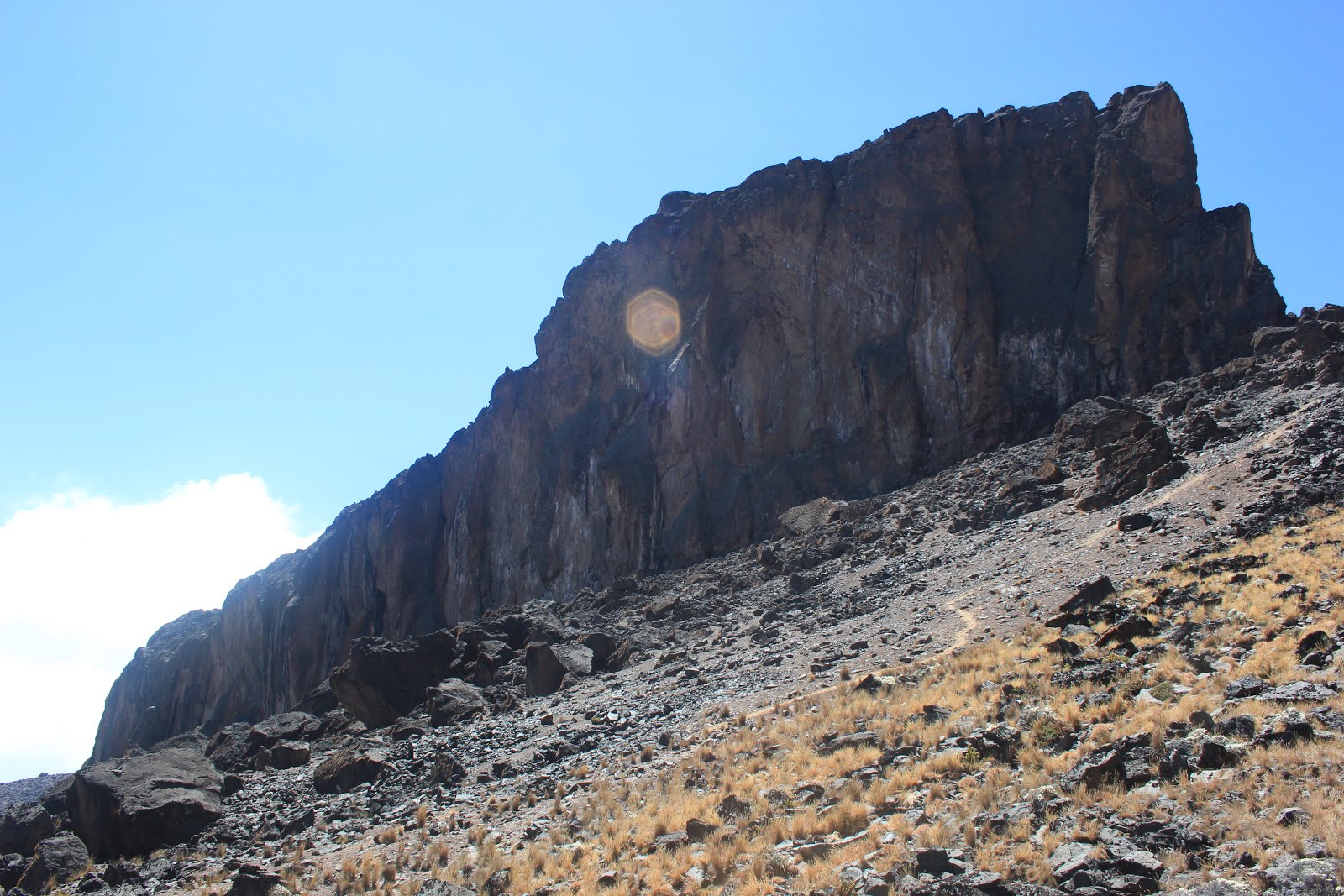
28 October 2016

Sahani

While living abroad, I've missed a lot of pieces of home. Some of them, like friends and family, I simply won't be able to be around until I return; however, others, such as hobbies and passions, tend to follow their possessor. As a guitar player, for example, I was overjoyed to encounter a guitar whose owner has kindly lent it to me until I depart in December.

"Sahani" means "plate" in Swahili, like the kind you eat off of. This may seem like a rather abrupt transition, but the plate is relevant here because it's one of the better ways to translate disc, the gamepiece of ultimate frisbee. So, to "play frisbee" can become "kucheza sahani." Ultimate is another part of campus I miss, so I was sure to search for a group playing even before I arrived in Arusha. I wasn't sure what I'd find, but it turns out there's a group of people scattered around Arusha who love to play frisbee. It took some nudging to get everyone to meet again on a regular basis, mostly because there was an issue with field space. But not long after I arrived, I was playing my favorite sport with a group of new friends.


Every Saturday we meet to toss together, warm up, and scrimmage. I really look forward to this part of the week, because it's the only time I'll get to play ultimate with a bunch of other people. I can throw with a friend or two during the week, but full game play always awaits on the weekend.


This coming weekend is particularly exciting. On Sunday, Arusha Ultimate Frisbee is traveling about two hours to Moshi to have a friendly match with the players there. I'm excited about this event, because it's a big step for the development of my favorite sport in northern Tanzania. The Arusha players can learn a lot from Moshi, and this game can be the beginning of a series of town scrimmages to come. I'll be sure to post about this next week!

The last thing I'll say about sahani is that it's so cool to watch it grow in East Africa. When I traveled to Uganda, I met many members of this East African ultimate community who will continue to organize events and start new teams. On the bus to Uganda, I met a husband and wife who run a school in Morombo, an area in the south of Arusha. They asked why I was traveling, and my answer involved an explanation of this great sport called "sahani." The couple was captivated and asked me to come play with the children at their school on one of their sports days every weekend. My Tanzanian friend and I recently began going to the school on Saturdays and teaching the kids to play. This weekend will be just our second trip, but I'm excited that we can introduce a fun and spirited sport to Arusha youth.

Being abroad, I've been able to bring my favorite parts of Boston--especially ultimate--back into my life. Now I have a good amount on my sahani!

22 October 2016

These Are a Few of my Favorite Things

A while ago I wrote about visiting Uganda and eating a bunch of tasty vyakula (foods) there, and now I'm thinking it's odd that I haven't written much about vyakula vya Tanzania. In fact, there are a lot of "little things" about life here that never fail to bring a smile to my face, yet that I haven't shared. Sense by sense, here is list of my favorite things in Arusha.

SIGHT

- view of Mount Meru


- kanga, kitenge, and the other varieties of colorful fabric: I wore kanga to work today!
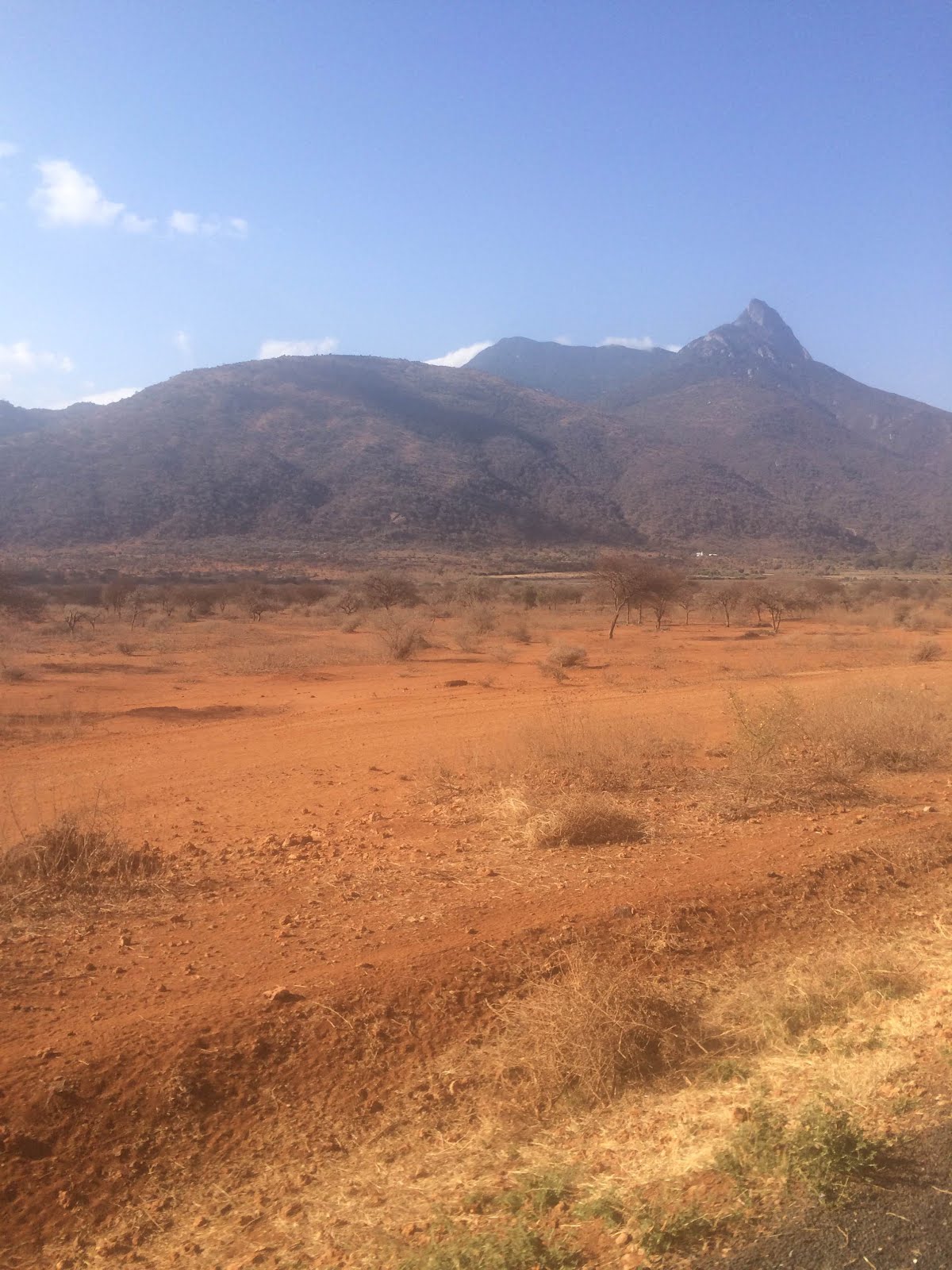

- chickens bobbing heads and digging in the dirt for their food
- the "lane of peace": The bus park in the morning can be hectic. Kondas (conductors) might shout destinations at you or grab your wrist to try to bring you to their bus. Finding what I call the "lane of peace," where one can walk in open space without konda bugging, is a morning highlight.


- jacaranda trees in bloom: Here some flowers from a huge jacaranda tree have fallen to the sidewalk. I love seeing the bright purple above my head, contrasting typical shades of green and brown.


- superb starling: I've probably mentioned this bird before. He's so beautiful and shiny.


HEARING

- African music: Tanzanian music is called "bongo flava" and it's really fun to dance to. In Tanzania, other African songs are popular, many of them coming from Nigeria. I mention this because I think most of my favorite songs here are Nigerian. To get an idea of the music I'm listening to, you can check out this playlist I'm making on Spotify
- birds chirping
- spoken Swahili: Soon I plan to post a video of myself speaking Swahili for anyone interested in my progress (i.e. my mom). Stay tuned! (Mom.)

TOUCH

- Maasai blanket: This article of fabric is a genuine phenomenon in Tanzania. I'm not exaggerating when I say that I truly believe my life has improved with the Maasai shuka in my life. It's a very portable, fairly thin, and surprisingly warm blanket coming in many patterns, almost all of them checkered. Maasai shuka have many applications, including a bedsheet, and shawl, a table cloth, a wall hanging, a skirt--the possibilities are endless and I can't rave enough. I currently own two shuka, but I'm sure that number will multiply before I leave Tanzania. Unfortunately, the best way I can describe my happiness in a shuka is with this silly selfie.


- front seat of the daladala: This feels amazing only relative to the crammed back seat. Without this comparison, the front seat feels like any reasonable car seating situation.
- cow's noses


- paka! They're so small and cute here. When people have them as pets, I tend to temporarily abduct them for snuggles.


SMELL

Hmmm...
It's possible that unpleasant smells greatly outnumber pleasant smells in Arusha--if you don't count anything that's edible. I haven't included anything edible here because stuff that you can eat that smells good also tastes good, which brings us to...

TASTE

As promised, vyakula vya Tanzania!
- sambusa: I don't eat a lot of meat, but this East African-style samosa (delightfully spiced meat stuffed inside a puffy yet crunchy wrapping) has me hooked. It's often served with a spicy sauce called pilipili, made from tomatoes, cucumber, carrots, hot peppers, and some other good stuff. On average I'd estimate I consume around 15 sambusa a week. Sanae and I learned how to make it from a wonderful woman at work. Here's the result of our lesson!


- chapati: This is like a tortilla, but thicker and much more oily. It has Indian origins but is now a staple of life in Arusha. I often eat chapati as breakfast or with lunch.


- chai ya maziwa: Translating directly to "tea of milk," chai ya maziwa is savory, gingery, cinnamonny and sweet all at once. I drink this with my chapati every morning in the restaurant next to work.
- kahawa: Coffee here is amazing. In fact, many plants in the area export to Starbucks and the like. There's also a pretty good instant coffee called Africafe. Below is coffee at Burka, a huge coffee plant near work. The raw beans might be exported or are there roasted to different degrees and sold.


- street corn + pili/lime powder: Many women grill and sell corn on the streets. Some of them, if requested, will rub the cob in a powdery/flakey pepper using a freshly cut lime half as a rubbing tool.
- fresh fruit juice: It's common to find juice from passion fruit, tamarind, mango, and even avocado.
- Stoney Tangawizi: This is a ginger soda ("tangawizi" means "ginger"), but it's much more flavorful and tangy than something like ginger ale. I've never seen this in the U.S., but if anyone knows where I can get it in Boston, please inform me immediately so I can avoid accidentally breaking any import laws by stuffing a bunch into my suitcase.


- nyama ya kusaga: Again, I don't like meat, but this spiced, minced beef is delicious.

With all these nice gems in Arusha, it will be hard coming back to Boston. So far, Tanzania is winning my heart.

13 October 2016

Kipepeo

Look at how big this butterfly is! It's the biggest one I've seen in my life. I don't have many words.


Today this guy was spotted at work. He was having trouble flying and attached himself to Sanae's pants for a little while.


A coworker educated me on the word "kipepeo," which is Swahili for "butterfly." I think it's cool that it literally translates to something like "that which flaps." ("Kupepea" is the verb meaning "to flap" or "to fan.")

This butterfly's visit illustrates one of my favorite things about Sikubora's location out of town near Kisongo--the fauna of the area. A few species of birds like to chirp around in the trees by the office. Even chickens poke their heads around looking for food. There are also multiple trains of livestock herded across the storefront daily, and these include mostly cows, goats, and sheep. It's fun to be able to look outside the office window every now and then to watch the animals going about their daily business as we go about our own.

07 October 2016

Mlima Kilimanjaro

Fewer than 80 kilometers from our home in Arusha resides the highest point in Africa, Kilimanjaro's Uhuru Peak. Before I tell you about climbing to it, here are some fast facts.

- Uhuru peak is 5,895 m (19,431 ft) tall.
- Uhuru is the Swahili word for "independence."
- Kilimanjaro is the world's tallest free-standing mountain, since it rises about 4,900 m from base to peak.

The Tanzanian government doesn't allow you to climb Kilimanjaro without a certified guide and crew, so you can't just walk up the mountain. It's actually quite an investment. Park fees are pretty high for foreigners, and some companies charge much more than necessary--tourism is quite the industry in Tanzania. Our group worked with a friend who organized our crew and took great care of us at a very fair price. We had three guides, a cook, and a set of eight porters. Our guides were Salim (our organizing friend), Rafa, and John. I referred to our cook as "mungu wa chakula" or "god of food" because he prepared scrumptious and nutritious meals over the week in order to keep us strong throughout our journey. The porters also did great work. I was so impressed by the ability to balance many kilograms of ungainly weight on one's head while jogging down a rocky, uneven trail.

There are a handful of routes to the summit, and we chose to trek the Lemosho route. The round trip was planned for six to eight days, depending on how we were doing with all the walking and the altitude. We ended up taking six days, five to hike to the summit and just one to get down. I liked the Lemosho route because it wasn't too crowded and we hiked through many different vegetation zones, getting a thorough sense of Kilimanjaro's landscapes. There was lush tropical forest, alpine desert, and moorland, among others. We stayed in tents each night at a series of camps along the route to the summit.

For many parts of this journey, I feel that pictures speak better than words.


There was a lot of cool wildlife even at higher altitudes of the mountain to my surprise. We saw many a small rodent that looked like a cross between a mouse and a chipmunk. We also saw doves, tiny cute brown birds, and spiders. This probably encompasses a lot of the wildlife at high altitudes. One I can't forget is the white-necked raven. They are giant (maybe rising to half my shin height) and somehow everywhere along the route (except near the summit). This bird was my favorite.


One major challenge in hiking to 5,895 meters is the sheer altitude of the feat. It's common for climbers to bring anti-altitude sickness medicine, since there's a big risk climbing Kilimanjaro. Without the medicine, I was fortunate to not have too many problems for most of the journey. I started having breathing difficulties on our day hiking to the summit, and I even passed out at one point. I was with my guide John at the time, and he was quite knowledgeable and knew what to do. He cracked my back, gave me tea, and continually checked in on me during the summit journey. I ended up taking the medicine around 5,000 m and once it set in, breathing was much easier and I was able to hike more comfortably.

On summit day, we woke up at 11pm and embarked at midnight. We hiked by headlamp light for seven hours, very slowly and up a seemingly endless series of steep switchbacks, on our final stretch to Uhuru. My friend commented that it "must be what purgatory is like." It's a pretty tough walk until you get to Stella Peak, but from there it's a relative breeze--a more steady and flatter journey to the summit. Upon finally arriving, we witnessed the congratulatory sign and stood among many other summitters. There was even one group paragliding off the mountain (and you can see one in a picture below). My favorite part of the top of Kilimanjaro is seeing Mt. Meru in the distance. Meru is important to me because I admire it every day rising above Arusha, and I appreciated this new perspective from Kilimanjaro above the clouds. Some summit views are below.


Due to the dangerously high altitude, you can't stay at the summit longer than around a half hour at most, which conveniently relieves the queue of many people looking to be photographed with the summit post. After taking pictures and spending our time on the "Roof of Africa," we began the journey back down to the base and eventually to our routine daily lives.

If you Google "Kilimanjaro name" and read the top few results, they'll tell you completely different theories of why the mountain is called Kilimanjaro. I was told by my friends and guides that "Kilimanjaro" is derived from the Chaga tribe language and means something along the lines of "a mountain difficult to climb." It's true that the journey can be difficult, but I'm so thankful to have had this rewarding experience.

02 October 2016

Panda!

A panda is indeed a black and white animal that is commonly pictured eating bamboo, but that's not relevant here. Rather, "Panda!" means "Climb!" (and a bunch of other things) in Swahili, and that's just what we did this weekend. Over six days, I trekked to Uhuru Peak, Kilimanjaro's highest point at 5,985 m or 19,341 ft, and back down to the park gate along with some great friends and a crew of guides, porters, and a splendid cook.

Here is a subset of the group at the summit.


The short story is that I took a lot of pictures, I ate a lot of good food, and I experienced some degree of altitude sickness. You can probably imagine that I'm pretty tired, so I'll rest now and post more details and pictures next week. In the meantime, as a brief introduction to the Kilimanjaro experience, I'll leave you with some critical key words.

polepole = slowly
maji = water
(those two were the most important)
baridi = cold
kupumua = to breathe
vigumu = difficult
barafu = ice (Barafu Camp was the last place we slept before summit)
(and, of course,) kupanda = to climb

Until next week!

23 September 2016

Habari

In Swahili, "habari" translates literally to "news," but it's most frequently used as a greeting that awaits a response.

Habari za asubuhi? = News of the morning?

Despite that the literal translation sounds unconventional in English, "Habari za [something]" is used as commonly as "How are you?" and "How is work/school/your day/etc.?"

With that said, here's my habari.

There are so many fun things to do outside of work that I forget to share what's happening at Sikubora. For the past few weeks, Sikubora has been preparing for review by investors. In our startup environment, everyone pitched in to create materials. It's been an interesting opportunity to experience more of the business aspects of Sikubora. I'm learning a lot more than I expected to beyond my major, and maybe one day I'd feel more comfortable trying to start a business.

I just mentioned the myriad fun activities to be done in Tanzania. This weekend we chose Snake Park, which led to many pictures of--you guessed it--snakes, along with some other fun creatures. Please enjoy this montage of Sanae interacting with such creatures.


Here are some other creatures from Snake Park. They are not interacting with Sanae, due to their being either a poisonous snake or a crocodile.


Perhaps my most exciting news lately is that this weekend my friends and I will begin to climb Mt. Kilimanjaro. I'm excited and a little nervous, because it's a long journey with a high elevation and great risk for altitude sickness. The journey will take six to eight days, over which we'll ascend 19,341 ft to the highest point in Africa. Nitakie bahati... wish me luck!

18 September 2016

The Ultimate Journey, Ft. Food

I traveled to Kampala, Uganda over the past weekend, departing Thursday evening and arriving Tuesday morning. By bus. By ~23-hour bus, each way. (It should have been 17 hours, but traffic and border troubles held up the bus traveling both there and back.)

So that was fun! I like to consider the (in reality, exhausting and headache-inducing) bus ride a brief yet exciting safari for which you're mostly forced to stay seated and denied an appropriate amount of bathroom breaks. I'm deeming it a valuable experience because I got to ride through the big cities, small villages, and beautiful countrysides of Tanzania, Kenya, and Uganda. To be fair to the bus, it was pretty snazzy. Check out just how snazzy.


The bus ride gave me a nice picture of life in these East African countries, and I noticed that many characteristics throughout the region are identical. There are pikipikis and daladalas everywhere, there are ditches on the side of the road to collect water and facilitate its flowing, people fry various crops and sell them on the streets, women gracefully balance heavy items upon their heads... the list goes on.

The main differences I saw between Arusha and the places I traveled through were in landscape. Western Kenya and Eastern Uganda are both much greener than Arusha's area, and the dust is a nice, reddish copper tone in contrast to the dull tan I've become accustomed to. My favorite sights from the bus were the Nile River in Uganda and Mt. Longido on the Tanzanian side of the Kenyan border. The Nile is simply huge and beautiful, and Longido (8652 ft tall) is a gem that I didn't realize is relatively in my backyard.


Another huge difference is the language scene. In Tanzania, Swahili is primary and English quite secondary. In Kenya, Swahili is worse and slang-heavy, and English is used frequently. Ugandan English is quite impeccable in many cases, but almost no one speaks Swahili--Luganda is the Ugandan preference and it's not really similar to Swahili. As I traveled from Tanzania through Kenya to Uganda, Swahili got worse and worse but English got better and better.

So, similarities and differences aside, traveling to Kampala offered a unique experience quite different from my day-to-day life in Arusha. You're probably wondering why I wandered all the way over to Kampala in the first place. I went in order to play in the 9th Annual Seven Hills Ultimate Frisbee Tournament. My friend in Arusha connected me with her team coming all the way from Canada, and we all met in Uganda to play Saturday and Sunday with 10 other teams whose players came mostly from Uganda, Kenya, Tanzania, and Rwanda.


In order to avoid rambling too much, I've listed a few highlights of the weekend below.
- I made new friends and connections in the East African ultimate community.
- Our team won the spirit award!
- I got a really cool, fluorescent red-orange Uganda disc.
- Big birds
- Food

If you read my bird-watching post, then you know how much I love birds. Imagine me seeing one more than half my height with a really great mohawk--I was immeasurably happy. Someone told me that these are the Ugandan equivalent of the seagull, in that they reside by water, are ubiquitous, and get in the way. As it turns out, this bird is called the grey crowned crane, it's the national bird, and it's even in the center of the Ugandan flag.


Check out this superb picture my friend captured of a grey crowned crane checking out some ultimate frisbee on the side of our field.

(Image courtesy of the wonderful Naomi Garneau)

Anyway, it's easy for me to get distracted by birds, and I should be talking about what I got from playing in the tournament. It was different from playing ultimate in Arusha (which I'll post about at some point). Uganda can probably be considered the hub of ultimate in East Africa, and it was refreshing to watch the clean plays run by those teams. There's a lot of natural talent and athleticism around this awesome sport in East Africa, clearly shown over the weekend. All in all, my favorite part of the tournament was simply the opportunity to witness the development of ultimate frisbee in this part of the world. It's truly an infectious sport, and most people I know who try it enjoy it and play again. I had a lot of fun yet also enhanced my understanding of the global framework of my favorite sport.


(Image again courtesy of Naomi Garneau)

Finally, I want to elaborate on the "food" highlight I listed. Uganda offered some delicious local foods that I haven't encountered in Arusha. This is rollex, a popular breakfast option that is essentially a thin omelette wrapped in chapati (where chapati, my favorite snack in Arusha, is an unleavened circle of deliciously oiled and cooked dough--similar to a tortilla but far superior).


Below is my plate from the tournament lunch, packed with traditional Ugandan food. That yellow mushy stuff is called matooke, and it's personally my least favorite. It's cooked and mushed banana, but not the fruity kind of banana that I'm used to at home in America. It's a variety commonly referred to as "cooking banana" and it's everywhere in East Africa, but it's more starchy and less sugary than the good kind of banana. Forget the matooke. That yellow ball to the upper left of it was some sort of potato situation I think, and to the right of it you can see chapati once again. Then there's a delicious, purple-brown colored sauce hiding at the back of the plate. It's called g-nut sauce and I could eat it by itself for days on end.


I can't fully convey how ecstatic I was to encounter the scrumptious sambusa in the picture below. Sambusa is basically the same thing as Indian samosa for those who are familiar. Take a delectable meat or vegetable filling and triangularly enclose it with a crispy and delicious shell. Sambusa are quite popular in Arusha, but they're half the size of the one taking up my whole hand (I don't have small hands) that I purchased while waiting for my return bus in Kampala. This sambusa was a great find for a couple of reasons. First, it was hot and I was hungry when I saw the man and his life-giving sambusa bucket. Second, it cost me 500 Ugandan Shillings. In Arusha, sambusa cost 500 Tanzanian Shillings each, but 1 TZS equals 1.55 UGX, so a giant sambusa in Uganda costs less than a much smaller sized one does in Arusha. In USD, my gargantuan sambusa costed $0.15. Mind-blowing. Life is so good.


I have no problem ending this post on a food discussion. The goal now is to learn how to prepare East African foods and bring a delicious revolution to Boston when I return.